


How Does RDmould By RuiDing Build Tamper-Evident Cap Moulds
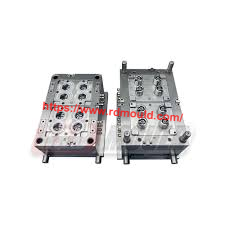
A buyer walks down a drink aisle and picks up a juice bottle. A thin ring sits below the cap. That ring cracks the first time the cap turns. The buyer knows the bottle stayed sealed until that moment. That small ring carries weight in food, dairy, and drug sales. It also raises a design question for the plant that makes the bottle. Can a Cap Mould form that ring and the cap in one shot? The answer decides how fast a line runs and how well a seal holds. RDmould, run by Taizhou Huangyan R&D Plastic Mould Co., Ltd., cuts cap and closure moulds in Huangyan, Zhejiang. The firm has built injection and blow moulds for over fifteen years. So what must a mould maker control to press a tamper band into a cap?
Taizhou Huangyan R&D Plastic Mould Co., Ltd. works in plastic injection moulds and blow moulds. Its plant sits in Huangyan, a base for mould making in China. Its team handles product design in 3D, prototyping, design documents in 2D and 3D, mould building, and delivery. Its cap closure line covers beverage caps, dairy and juice closures, and units for HDPE and PET bottles. It also makes large cap moulds, flip-top caps, inner caps, and screw caps. A buyer can send a drawing and get a quote on cavity count and steel grade. That path lets a plant match the mould to its press and its output goal.
A tamper-evident cap joins the shell to a thin band through small bridges. The band sits below the thread. When the cap turns, the bridges snap. The band stays on the neck. The user sees the break and knows the seal held before. That design needs tight steel work. The bridges must form at a set width. A wide bridge fails to snap. A thin bridge breaks in transit. The mould must cut each bridge to the same size across every cavity.
Steel choice sets the life of the tool. RDmould uses high grade steel such as S136, 2316, and H13. These grades hold a polish and resist wear over long runs. A sound steel block keeps tight tolerance across millions of shots. A soft block wears at the gate and the bridge slots. That wear shows up as flash or weak bridges. A buyer should ask which steel the maker plans to use. A buyer should ask how the maker will hold the bridge size over time.
Cooling also shapes the band. A thin ring cools fast. A thick shell cools slow. If the two cool at a wrong pace, the part warps. A warp bends the band and breaks the bridges on the line. RDmould offers an optional water cooling system to speed the cycle. A steady cycle keeps each shot the same. That steadiness protects the band.
The hot runner and the temperature controller add control. A stable hot runner feeds melt at a set heat. A stable controller holds that heat across a long shift. A shift in heat changes how the plastic fills the bridge slots. A sound setup keeps each cavity filled the same way.
Ejection also matters. The cap must leave the core without bending the band. A poor ejector pin marks the shell or cracks the ring. A sound layout lifts the part with even force. RDmould fits self-lock features to stop eccentric wear. It also uses interchangeable core inserts. That design eases repair when a single cavity wears.
A buyer should test a sample before a full order. A sample run shows how the bridges snap. It shows if the band stays on the neck. It shows if the cap seals under pressure. A buyer should ask for a cycle time figure. A buyer should ask about the cavity count. A buyer should ask about spare inserts and service.
The https://www.rdmould.com shows Cap Closure Mould units from RDmould by RuiDing, with flip-top, screw, inner, and large cap styles. The specs sit open for review. A buyer can line up a mould with the bottle, the press, and the output goal. Does a maker that cuts its own steel and tests each bridge earn your trust for the next cap run?
 Deutsch
 English
 Arabic
 French
 Spanish
 Portuguese
 Turkish
 Dutch
Dutch
 Italiano
 Russian
 Romaian
 Portuguese (Brazil)
 Greek
Greek