


Exploring Tool Construction, Handling, and Maintenance in Automotive Repair
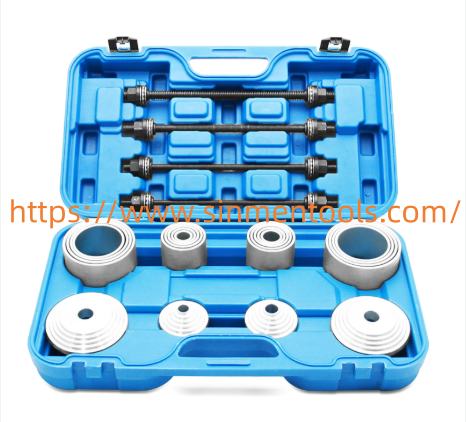
Bearings are installed in many mechanical assemblies, where they support rotation and help components move smoothly. When maintenance or replacement becomes necessary, removing a fitted bearing without harming its shaft, housing, or adjacent parts can be challenging. A Bearing Puller provides a mechanical approach to this task by gripping the bearing or an appropriate contact point and applying controlled force to separate the fitted components. Its suitability depends on construction quality, gripping geometry, operating method, and the conditions surrounding the repair.
Material selection has a direct influence on tool reliability. Puller arms, supporting structures, and threaded components need materials that can withstand the forces involved in extraction. Metal construction is commonly used because it can provide the rigidity required for mechanical work. The quality of the material, its processing, and the condition of its finished surfaces all matter. Buyers should consider how these elements work together instead of relying solely on a polished appearance or a general product description.
The gripping structure deserves particular attention because bearings can be positioned in different ways. Some are accessible from the outside, while others sit within housings or behind nearby components. Puller designs may use arms, hooks, separators, or other contact arrangements to engage the target part. The most appropriate configuration depends on the available clearance and the surfaces that can be contacted safely. A tool should fit the removal task rather than forcing the technician to adapt an unsuitable design.
Purchasing decisions should begin with identifying the bearing's location and how it is mounted. Buyers can consider whether the component is installed on a shaft, recessed inside a housing, or surrounded by other mechanical parts. The available working space, direction of removal, and accessibility of the bearing edges can influence tool selection. Providing photographs, drawings, or clear descriptions of the repair situation can help a supplier understand the application and recommend a suitable product.
The method of force application is another important consideration. Many pullers use a central screw to convert turning movement into a linear force. As the screw advances, the gripping structure holds the target component while the tool gradually separates it from its mounting position. Stable alignment helps distribute force more evenly and reduces the likelihood of slipping. Technicians should follow the tool manufacturer's instructions and avoid forcing a component when the setup is unstable or the bearing remains improperly engaged.
Different removal situations may call for different tool arrangements. A conventional arm-style puller may suit bearings with accessible outer edges, while a separator-style design can be useful when the space behind a component is limited. Some applications require specialized accessories or additional support to establish a secure contact point. Buyers should evaluate the complete tool system, including any supplied attachments, rather than assuming one configuration can handle every bearing installation.
The surrounding assembly must also be protected during removal. Excessive or poorly directed force can damage shafts, housings, retaining features, or nearby components. Before applying pressure, technicians should check for retaining rings, locking devices, fasteners, or other features that may prevent removal. The tool should contact suitable surfaces and remain aligned throughout the operation. If the bearing does not begin to move as expected, reassessing the setup is safer than continuing with an improvised method.
Handling comfort influences everyday workshop use. Adjustment points that are easy to reach can simplify positioning, while a clear relationship between the screw and gripping arms helps technicians understand how the tool will respond during operation. A compact arrangement may be useful in restricted areas, provided the design remains suitable for the task. These practical details can reduce unnecessary repositioning and make the tool easier to use across different maintenance situations.
Maintenance is important for preserving tool condition. Threaded sections can accumulate grease, dust, and metal residue, while gripping surfaces may become worn through repeated contact. Cleaning the tool after use helps make inspection easier. Technicians should check for damaged threads, distorted arms, loose connections, or other visible defects before returning it to service. Where the manufacturer recommends lubrication or particular storage practices, following that guidance can help maintain smooth operation.
Safety should remain part of the removal process from setup to completion. A bearing may release suddenly once the fitted connection loosens, so technicians should keep clear of potential movement paths and wear suitable protective equipment. The tool must be properly engaged before force is applied, and damaged equipment should not be used. Selecting a tool that matches the component and working conditions is an important part of avoiding unstable contact and unnecessary mechanical stress.
Product design also affects how easily a tool fits into a workshop's existing practices. Clear surface finishes, identifiable components, practical adjustment features, and a structure that is easy to clean can support daily handling. Corrosion-resistant surface treatments may be relevant for tools exposed to moisture or frequent cleaning, depending on the material and intended environment. Appearance is useful when it supports identification and usability, but mechanical suitability remains central to product evaluation.
Taizhou Xinming Technology Co., Ltd. supplies automotive repair tools for workshop and maintenance applications. Buyers comparing tool options can discuss bearing placement, surrounding clearance, contact requirements, and the intended removal process with the supplier. These details can help establish whether a particular puller configuration is appropriate and whether additional accessories are needed. For workshops and distributors exploring related tools, product range, construction, finishing, and usage guidance are useful points to review.
In repair environments, bearing removal often takes place alongside inspection, replacement, cleaning, and reassembly. Keeping the removal tool in suitable condition and selecting it according to the actual mechanical arrangement can help technicians work more methodically. Businesses interested in automotive repair tools and product information from Taizhou Xinming Technology Co., Ltd. can visit https://www.sinmentools.com/ to explore its available solutions.
 Russian
 English
 Arabic
 French
 Spanish
 Portuguese
 Deutsch
 Turkish
 Dutch
 Italiano
 Romaian
 Portuguese (Brazil)
 Greek